How Get Shorty Uses Plot Devices to Serve Character
Another in my series of essays on how to analyze classic and contemporary noir and crime films and books as a writer to glean craft lessons.
Four aspiring film producers.
Three organized crime factions.
Two unrelated bags of cash.
There’s a lot going on in Get Shorty, the film adaptation of Elmore Leonard’s classic crime novel. The plot is not for the easily confused. It does add up, but it needs traction — chains on the wheels — to keep from slipping. And yet, paradoxically, it never feels overplotted or mechanical.
Rather than teasing apart every narrative thread, it’s more instructive to continue to count down toward one: the single object that quietly links nearly all the players. The one airport locker key.
The Airport Locker Key: A Plot Device
The locker key, passed from hand to hand, promises access to half a million dollars sitting inside an airport locker. Characters seek it, misuse it, misunderstand it, or are tricked into trying to use it. On the surface, it looks like a classic crime-story engine.
But the key, and the money it unlocks, is not what the plot is about, despite what that amount of money means to so many of the characters.
The story of Get Shorty revolves around Chili Palmer (John Travolta) and his quixotic, sideways journey toward becoming a film producer. The key functions not as a destination but as a gear in the story’s machinery: something that engages characters and reveals who they are through how they respond to it.
As a crime fiction developmental editor, I see many manuscripts driven almost entirely by props: stashes of money, rare gems, priceless artifacts. Too often, the object drives the character. In Get Shorty, Leonard reverses this. Character drives plot; the object merely tests it.
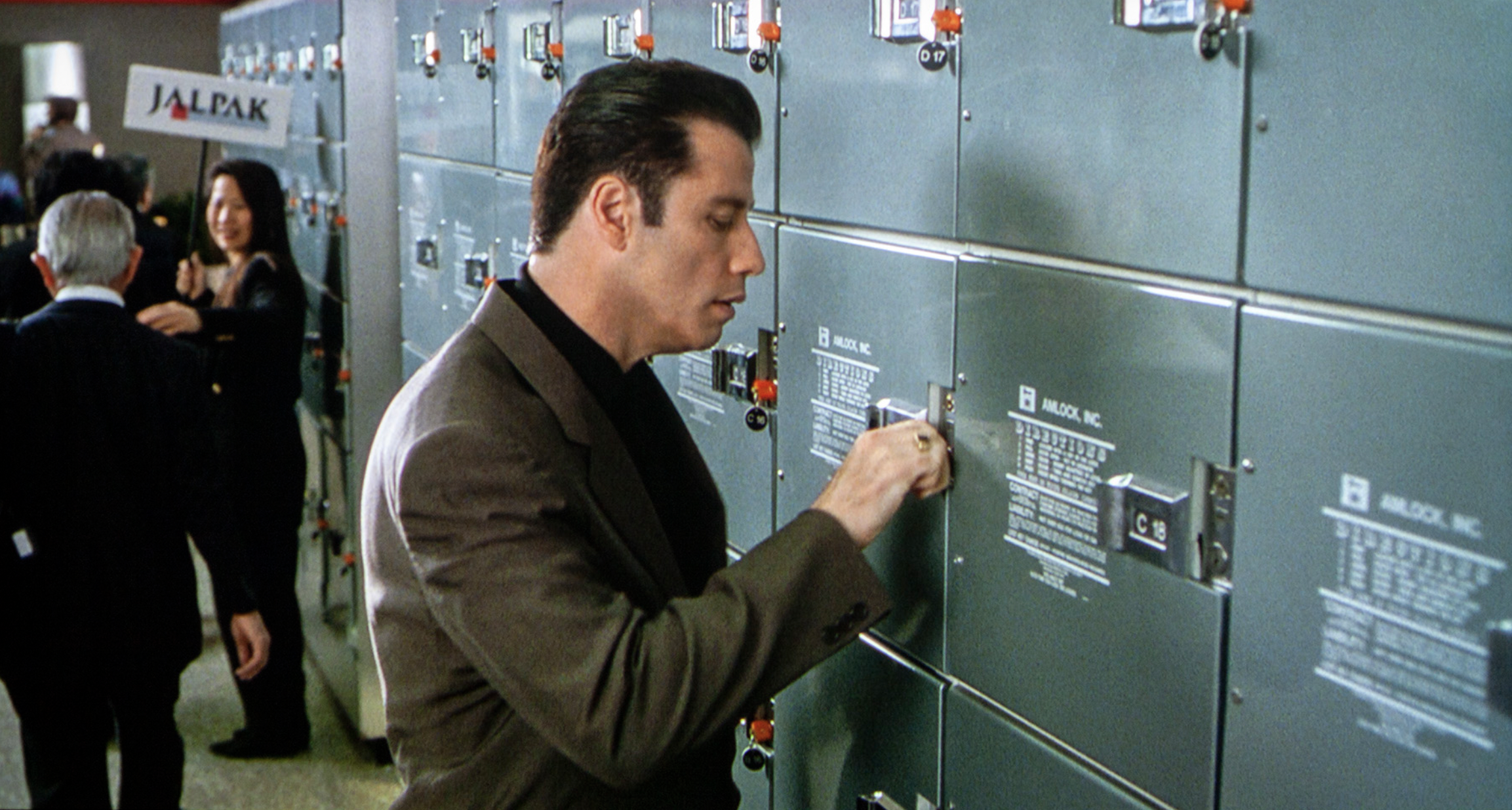
Chili Palmer fakeing out the DEA.
Crime Writer’s Device: The Key as Chekhov’s Gun
The locker key acts as a variation on Chekhov’s Gun. For those unfamiliar, the principle is simple: if a gun appears in the first act, it must go off by the third.
The key appears early, within the first ten minutes, when drug runner Bo Catlett (Delroy Lindo) leaves it behind for a courier arriving from Colombia. Inside the locker is half a million dollars, with DEA agents already circling the stash.
Catlett later offers the key to Chili Palmer in an attempt to set him up for arrest. Palmer, reading the situation correctly, outmaneuvers both Catlett and the DEA. He doesn’t just survive the encounter—he appropriates the key and turns the trap into leverage.
What matters here is not the money, but how different characters respond to the same temptation:
One character, Yayo (Jacob Vargas), is too cautious to act at all and refuses to collect the money.
Another, Bones (Dennis Farina), lacks situational awareness and is arrested trying to open the locker.
Palmer understands the psychology behind the test and uses it strategically.
The key does not act upon the characters, but rather, engages them. It becomes a litmus test for intelligence, adaptability, and imagination.
Why Nobody Goes After the Money
Here’s where the plot appears to break down, at least logically.
Half a million dollars is sitting in an airport locker. People in this film, and in reality, kill for far less. Several characters are desperate to raise money to finance a movie and are willing to betray or threaten others to do so. Distracting the DEA doesn’t appear especially difficult, and Palmer does it easily enough.
And yet, no one makes a serious attempt to retrieve the money.
This feels like a flaw, until you recognize that neither the book nor the film is actually about getting the money.
The locker key complicates decisions rather than resolving them. It ties characters together, escalates conflict, and reveals priorities. In the end, the money remains unclaimed because the point of the film is not banking loot, but, rather, transformation.
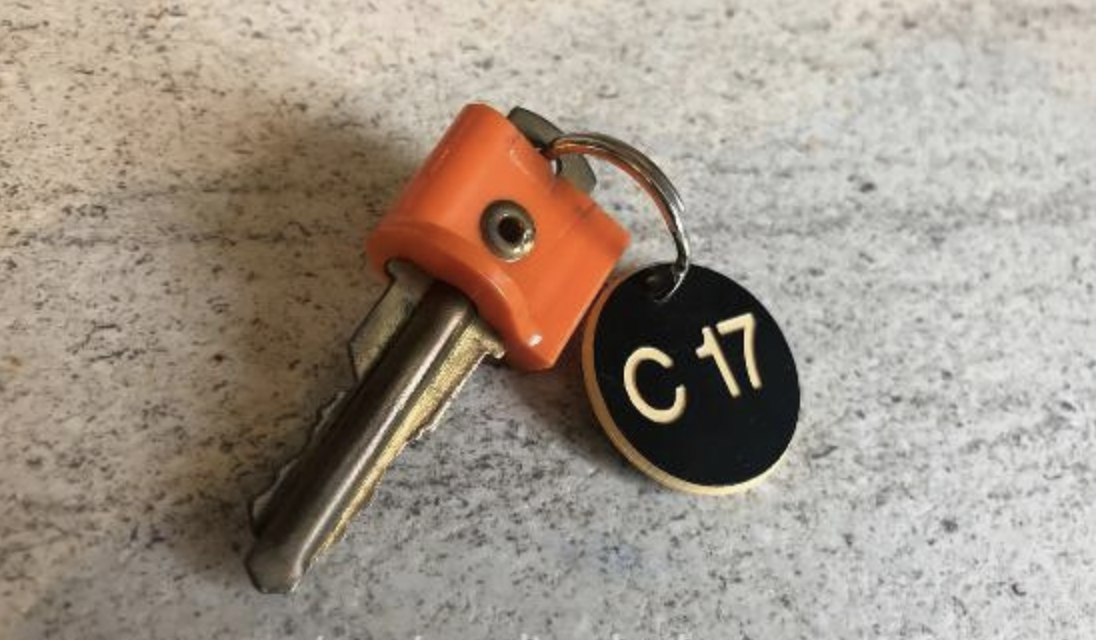
The key to it all.
What Crime Writers Can Learn from the Locker Key
Several craft lessons emerge from Leonard’s use of this device:
1. Character Drives Plot
Even the most elegant plot device is inert without characters whose compulsions animate it.
2. Props Can—and Should—Evolve
Like Chekhov’s gun, a recurring object must change meaning as the story progresses. The key moves from pocket to pocket, testing characters as it goes, before playing a decisive role in the resolution.
3. Objects Reveal Character
Like the conch or the pig’s head in Lord of the Flies, the key reflects who holds power.
Low-Stakes Triggers, High-Stakes Consequences
Changing gears, but keeping with Get Shorty, another lesson from work lies in how the story is launched.
I have a soft spot for narratives that begin with low-stakes ego battles or seemingly trivial misunderstandings. The Wire does this masterfully in Season Two, where a petty dispute over who gets to donate a stained-glass window to a beloved church escalates into the exposure of a major smuggling operation.
In Get Shorty, the inciting incident is even smaller: Chili Palmer’s leather jacket is taken from a restaurant coatroom by a rival gangster. It’s not especially expensive, and Palmer knows reclaiming it will provoke retaliation. But, he does it anyway.
That decision sets off a chain of reprisals, ultimately sending Palmer to Las Vegas to collect a debt and triggering a pursuit that turns deadly.
Notably, Palmer later discards the jacket in favor of a sleeker, Armani-like sports coat, which is more fitting for the identity he is in the process of assuming.
Stakes Beneath the Surface
The point wasn’t the jacket. The real stake is identity: Palmer’s sense of self and his standing in the world. What looks small on the surface speaks directly to the character’s core, his identity. Crime stories often hide their true stakes this way, disguising existential questions as petty conflicts.
Assignment for Crime Writers
Watch Get Shorty again and track Chili Palmer closely:
Is he written to be smarter than those he overcomes?
Are we meant to laugh at him, or with him?
How does his understanding of power change as he moves between worlds?
Leonard’s lesson is subtle but enduring: the smartest characters are not those who seize every opportunity, but those who know which ones no longer matter.
Matt Henderson Ellis is a crime fiction developmental editor and author.